
Announcing: Fathom V4
Fathom V4 has been live for over a month. Here's what changed: entry and exit pages, Google Search Console, custom exports, departure pings, and a lot less technical debt.


I am so excited to announce the release of Fathom V4. We quietly shipped the new dashboard last month and are ready to share what we’ve done.
This post sets the stage for a future technical deep dive, but for now, here is what’s new and why it matters.
Fathom got better
For years, we dreamed of a new analytics engine that could work the way we wanted it to: running at massive scale while delivering page, event, and session-level metrics with far more consistency and flexibility.
We already offered many of these capabilities, but our previous ingest application limited what we could build on top of it. As of 28 February 2026, that has changed. Our new analytics model gives us the foundation we always wanted and unlocks a much better version of Fathom.
Entry pages, exit pages, and consistent filtering
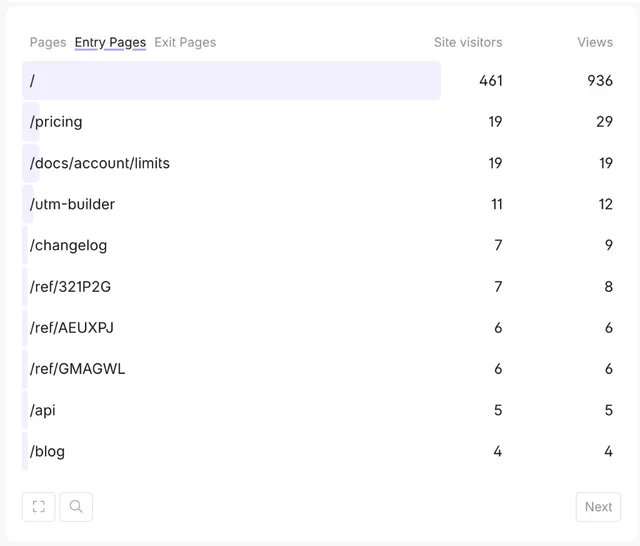
For a long time, we wanted to ship entry pages and exit pages as first-class dashboard views and filters. It is one of those obvious analytics features that should have existed sooner, but technical debt kept getting in the way.
That is no longer the case. You can now see which pages visitors entered through, which pages they exited from, and filter an entire session using that context. We have also tightened up filtering so that once you drill into page or event filtering, the dashboard switches cleanly into page-interaction context instead of mixing levels of attribution. It feels much more consistent, and we are very happy with where it landed.
Google Search Console integration
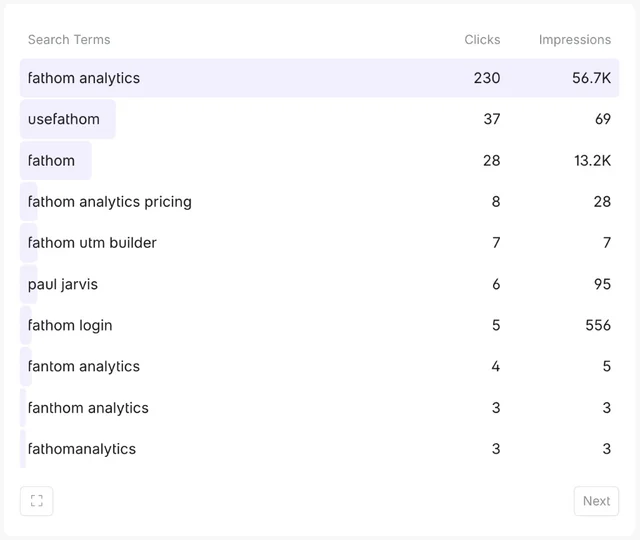
Our Google Search Console integration is extremely powerful. Link your site and see the Google search terms, countries, device types, and pages sending traffic your way.
You can also filter, exclude, and combine filters as needed, quickly and powerfully. That means less guesswork and a much clearer view of how search traffic actually performs.
Custom data exports
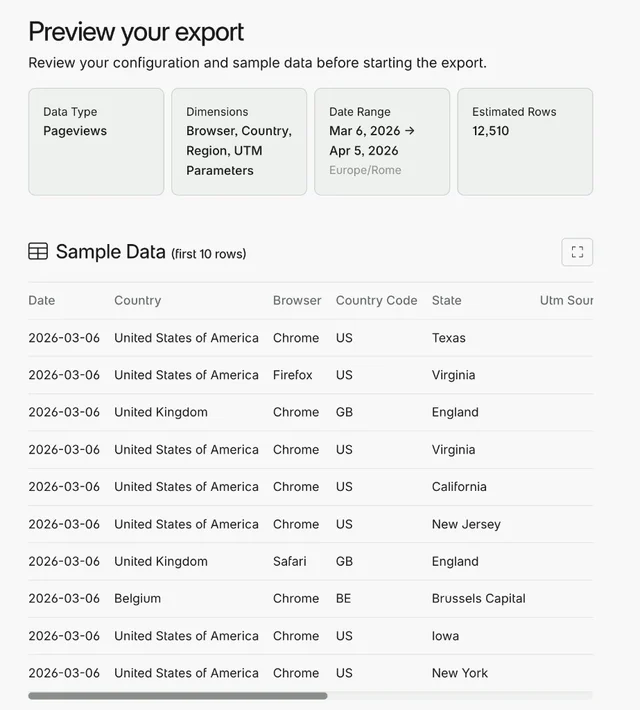
From day one, we have said your data belongs to you. We do not want to hold it hostage. We want customers to stay because they love the product, not because exporting their data is painful.
With custom data exports, you can now build exactly the export you need through a friendly interface, without having to make API requests or settle for a one-size-fits-all CSV. This is a big step forward for teams that want deeper reporting without extra friction.
Dashboard download
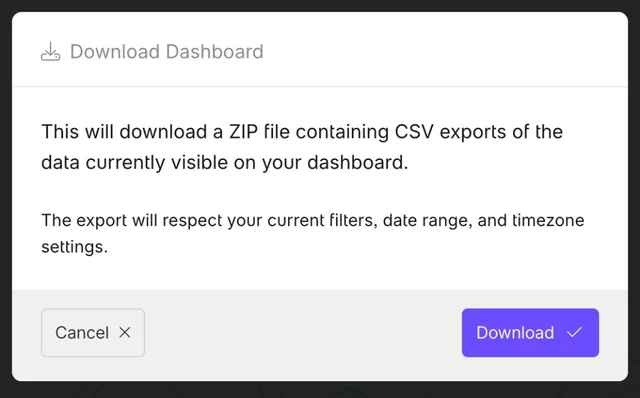
You can now download your dashboard as a ZIP file of CSVs, covering all pages for deeper reporting and analysis. It is a simple addition, but a genuinely useful one for anyone who wants to work with their data outside the app.
Departure pings
For years, we wanted to offer departure pings. Historically, we used the time between pageviews to estimate time on site, but that ignored single-page sessions and was never a true measure of time on page. It was really just time between pageviews.
Now, when a visitor leaves a page, we send an additional request that records that departure. This gives us a much more accurate picture of real user engagement, especially for visits that begin and end on the same page. It is a meaningful step toward better measurement, and we will keep improving it.
Referrer persistence
One of our bigger pieces of technical debt was inconsistent referrer tracking across sessions. Previously, a referrer or UTM parameter did not persist beyond the first pageview, except in a few event-based workarounds. That meant user journey attribution could become inaccurate.
We fixed that. Referrer and campaign data now persist much more reliably throughout the session, which makes attribution and user journey analysis significantly more accurate.
RIP: technical debt
Fathom is now more than five years old, which makes me feel old, and it also means we have carried technical debt from the early days for a long time.
The original version of Fathom did not even let you drill down into your data. We had to layer a lot onto the product over time, and some of those early decisions made future improvements harder than they should have been. This rebuild changes that.
Fathom is now a much more powerful piece of software, and we are shipping faster than ever. We already have multiple new features in beta that will make it even better.
For a deeper look at how every metric is now calculated, including referrer attribution, time on site, bounce rate, and more, read our measurement documentation.
Stay tuned for a much deeper technical write-up later this month.